In 2023, director Emerald Fennell’s second film, Saltburn, was released. The name in itself was enough to call attention, appearing on TikTok long after its theatrical release, much to the tune of ‘Saltburn… (face with hand over mouth emoji/shocked emoji/hot face emoji).’ Fennell reveled in the lengths to which she was willing to push the envelope of an American-wide-release film, creating a handful of shocking scenes that seem to inculcate themselves in your mind at its mention. Despite these moments, however, the film still manages to feel painfully vapid, as if Fennell put the most effort into a few scenes and left the rest to a ‘vibe,’ for lack of a better word. The success of films like Saltburn, Call Me By Your Name, and Midsommar feels indicative of a new, social media-influenced age of filmmaking, where aesthetic is being prioritized more than ever.
‘Aesthetic’ seems to have garnered a negative connotation, but a film with a heightened attention towards its aesthetic is not inherently a bad thing. Throughout history, stylized films have been a way for directors to deviate from the style of Hollywood at the time, but because of the nearly nonexistent nature of independent filmmaking, only the more tenured directors were able to take such creative liberties. Films such as Obayashi’s House and Kubrick’s Barry Lyndon felt like a breath of fresh air in the industry, not only because of their quality, but because films with such attentiveness towards their atmosphere only came out once every five or so years.
The popularization of the independent genre is what really allowed a wide range of directors to explore their artistic style within their filmmaking. Though not the originator, A24 undeniably did a lot to bring ‘aesthetic’ films to the forefront of the industry. In its approach to marketing being primarily social media-based, the films they’re releasing have to be intrinsically ‘trendy’ to a degree. This isn’t an indictment of A24 at all. They’ve produced generation-defining films with both widespread critical acclaim and popularity. On the other end of the spectrum, though, they’ve perfected their approach so much so that the term ‘A24-style’ has started popping up, as if it’s not just a large multimillion-dollar conglomerate.
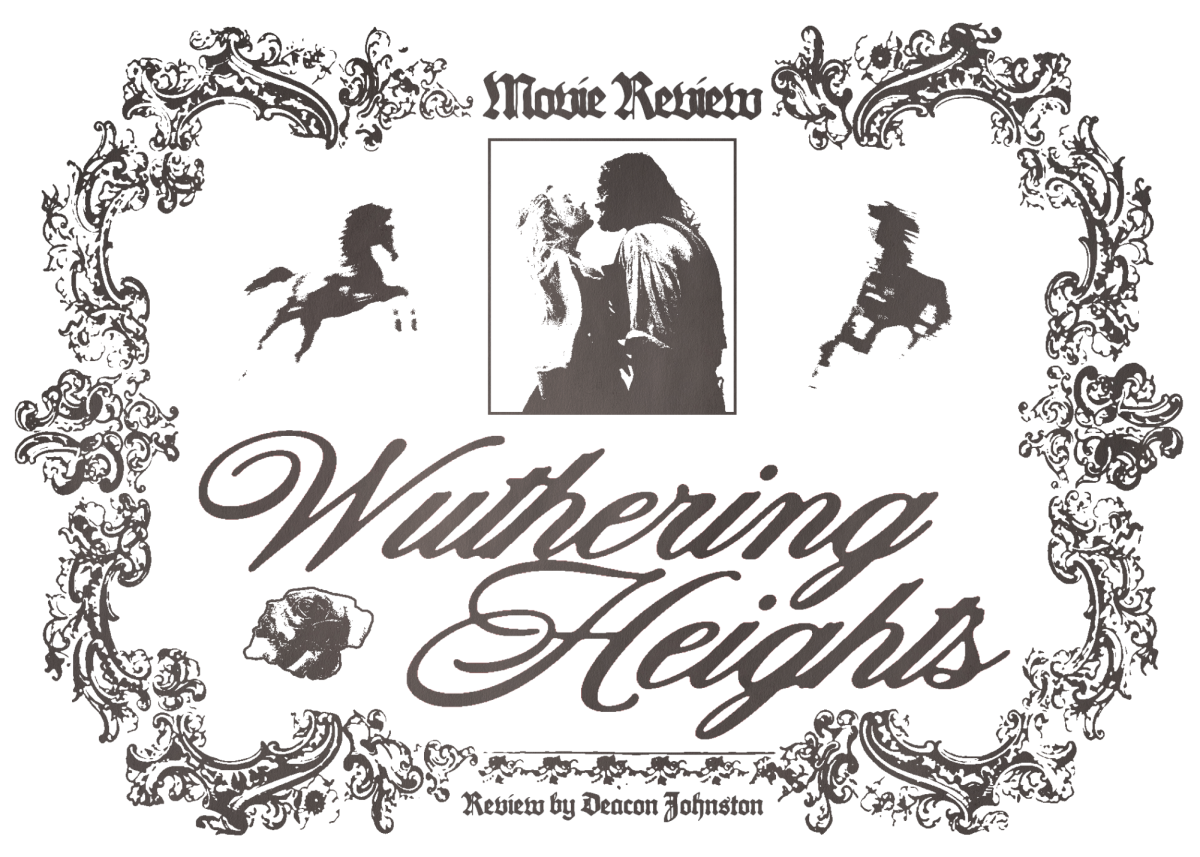
It’s with the popularity of A24 that the line between aesthetic as a compliment and aesthetic as a crutch has started to blur. This is where “Wuthering Heights” comes in.
If the prior statement is any indication of my stance on the film, there are some positive aspects. Cinematographer Linus Sandergren really helps to bring the Victorian moodiness of the source material to the screen, utilizing a damp and foggy visual style, without falling into the drabness that often happens when taking this approach. A handful of shots were so astonishing that they were nearly able to reinvigorate me in the film, and helped to inject some much-needed personality.
The conundrum that I faced while watching this film was how such a masterfully shot movie was put in the hands of a director who, and I mean this in the kindest way possible, feels inept at times.
A lot of foresight going into the movie comes from the words of Fennell herself, stating that she wanted to make the film she “experienced when (she) was 14” (BBC). To be frank, you can tell, but this isn’t necessarily bad in concept. Although I haven’t read the source material, from my brief research of the novel Wuthering Heights, there are a lot of thematic elements densely packed in, so having to pick and choose what to extract from it is a sacrifice almost every book-to-film adaptation has to make for the sake of the medium. Fennell chooses to focus on the woman’s lack of freedom of sexual expression in the 19th century, which would be a great concept if she decided to say anything about it. I want to specify that I’m not being prudish or hyper-intellectual about this- the film is extremely self-serious and has no intention of being particularly funny or charming, so in my opinion, the least it could do is pack some metaphorical punch.
The lack of depth is the main reason I left the theater believing Fennell wasn’t writing and directing with the sole purpose of making a great movie, but rather to replicate the moment that Saltburn had on social media discourse. As mentioned before, she leans very heavily on the aesthetics of the film, which works really well for an Instagram slideshow captioned ‘The details of “Wuthering Heights,” or a Pinterest mood board, or a TikTok raving over Heathcliff lifting Catherine via her corset or covering her face from the rain, but without much substance supporting the film it begins to wear thin early in the two hour runtime.
The writing on the wall going into the film should’ve been that the score would be composed by Charli XCX. I optimistically wanted to believe in Charli XCX’s ability as an artist, but even the soundtrack feels half-baked, as if she was thrown into this real tight corner of blending electronic-club-pop with classical music, which leads me to believe this is yet another decision not made strictly with the quality of the film in mind, but its marketability; its aesthetic.
On a more positive note, Margot Robbie and Jacob Elordi are also highlights of “Wuthering Heights,” giving life to a script that doesn’t lend itself to a lot of chemistry (trying really hard not be backhanded about this). They’re also attractive, so minus the potential erasure of a person of color in a lead role, good job on the casting.
Regardless of the implications “Wuthering Heights” has on the industry as a whole and how the age of short-form content is seeping into the art of filmmaking, I wouldn’t wholly disregard the film if it were at least a little fun – but I can’t even say that. With the beautiful cinematography and limitless potential of the leads, I walk away more frustrated than anything, because it was honestly a struggle to get through. Maybe this style will resonate with you more than I, and maybe it’s just not a movie made for me, but I was overall disappointed with Emerald Fennell’s latest showing.