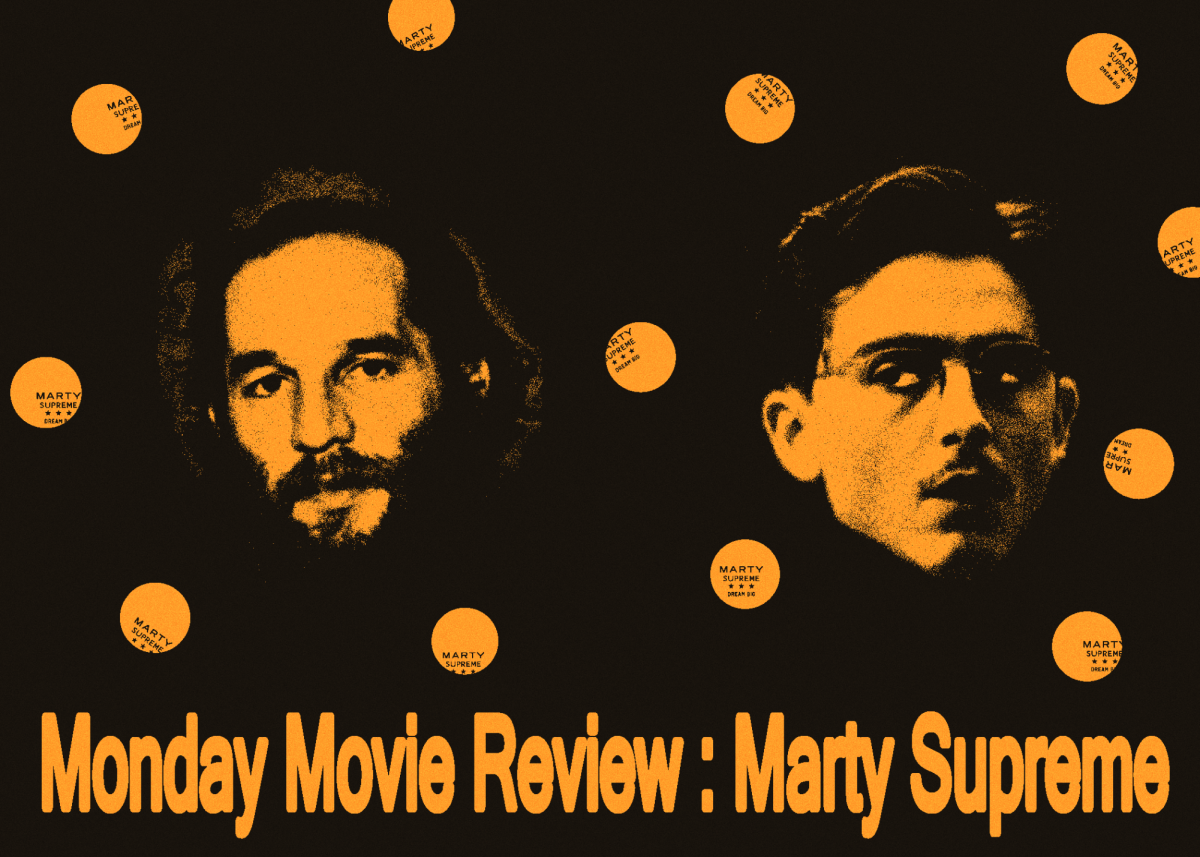
Marty Supreme will likely go down as the most significant film in terms of director Josh Safdie’s career. The breakout director-duo consisting of brothers Josh and Benny Safdie released their film Uncut Gems in 2019, which was met with both critical and commercial success.
This film, as well as Good Time, released two years earlier, displayed two young, yet extremely confident and refined directors, carving out a unique style centered around “pushed out” lead actors, anxiety-inducing editing, and plot lines following men plagued with addiction and ego. Following Uncut Gems, the Safdie brothers were the most influential figures in the modern indie scene, and after returning $50 million on a $19 million budget, studios were clamoring to fund another film.
It was at this point that the duo split, Benny attributing it to the brothers wanting to go down different creative journeys.
Since 2019, there had been no output from Josh Safdie (apart from directing Adam Sandler’s 2024 stand-up comedy special Love You), until it was announced that he’d be returning to A24 to make his solo directorial debut – a period piece about a table tennis player starring Timothée Chalamet? Not only that, but A24 was sinking around $90 million into this movie, the production company’s biggest budget up to this point… AND it would be a seasonal release?
It was certainly a bold move, and after watching Marty Supreme on Christmas Day, I can confidently say that this movie paid off in every single aspect.
Staying on Josh Safdie, the style he and his brother cultivated in their first two films is being executed to its absolute fullest potential in Marty Supreme. With most of the Safdie brothers’ crew returning for the film, among the most important is writer Ronald Bronstein, as he helps to deliver one of the most rambunctious and dense screenplays of this year, constantly teetering on biting off more than they can chew but maintaining control of the centripetal force around Timothée Chalamet.
On that note, it might be the extensive rollout swaying my opinion (around 20 belaboring comments about chasing greatness, the windbreaker that hasn’t left his body in months, rapping about Marty Supreme on an EsDeeKid remix- extensive is an understatement), but this feels like a career-defining role for Chalamet. He embodies the charisma and confidence fueling Marty’s narcissism and manipulative tendencies, and embraces what is, in my opinion, a depiction of a person blinded by passion and idealism.
In discourse surrounding the movie, a lot of people (Chalamet included, potentially) are interpreting the character of Marty Mauser as a passionate, dedicated hero who will stop at nothing to succeed, the film as a whole a love letter to the American dream. Within the context of Safdie’s prior movies, though, Marty feels much less like an idol, but another man ravaged by his own addiction, in this instance, the pursuit of the success that he believes is not only possible, but what he deserves. In this way, the film draws a lot of parallels to Scorsese films such as The Wolf of Wall Street, or even Breaking Bad, but executed in an arguably more honest way.
The latter-mentioned films rely on a subversion of expectation to create a sense of disgust and almost betrayal within the viewer, despite knowing the character throughout (Jordan Belfort’s antics are depicted as humorous and rebellious up until he punches his wife in an attempt to kidnap his daughter; we root for Walter White in his disintegration to a gangster until he also tries to kidnap his daughter). However, after the first act, Safdie never misleads us in terms of the morality of Marty’s actions- they’re all pretty terrible, and he faces the brunt of his actions with immediacy, and yet continues down this cascading path of bad actions, so blinded by his own desire for greatness. This is successful in part due to the Safdie style, which is working at its best when you’re squirming in your seat.
The most interesting thematic element is the ending (if you’re avoiding spoilers, I would skip this paragraph), with many interpreting it as a conclusion to Marty’s pursuit of table-tennis immortality, and when he decided he was ready to hang the gloves up and return to his baby. This also, however, feels like a misinterpretation of Safdie’s intention, most apparent to me in his exhibition game against Endo, where he finally triumphs over his rival and completes what he was aiming for all along, leading to… an anti-climactic slow zoom over Marty, as his expression fades from proud to seemingly disappointed, symphonyed by minimal cheering and the thinnest, puniest string section I’ve ever heard composed by Daniel Lopatin (who yet again delivers one of the greatest scores of the year).
It is at this point that, rather than fighting to return to the World Championship in Tokyo, Marty goes back home to see the mother of his child, whom he’d abandoned just days prior. In no way am I arguing that this is a redemption of Marty’s character, nor do I believe that was Safdie’s intention, but it is at this point that he realizes that this greatness that he’s been chasing is, in a way, a hoax. A hoax bolstered by a Cold War American society, investing endless resources into lapping the rest of the world for the sake of social dominance, a hoax bolstered by an unchallenged male virility.
The 149-minute epic of Marty Supreme is a return to form for Josh Safdie, using his inflated budget to its fullest to deliver one of the most nerve-wracking yet entertaining films of the decade. The haphazardly assembled cast fully buys in, and the crew is operating like they’ve submerged each other in their idiosyncrasy for just short of ten years. There’s not much more that you can ask.
★★★★★
5/5 stars